Happy Smile Display Font for Handmade Creators
If you’ve ever spent hours tweaking letter spacing on a wedding invitation only to realize the font lacks warmth—or struggled to find a display font that cuts cleanly on your Cricut while still feeling elegant—then Happy Smile is the kind of typeface that quietly solves real problems. As someone who designs printable planners, hand-pours soy candles, and ships custom sticker sheets every week, I don’t reach for fonts based on trends. I reach for ones that hold up under production: crisp at 8pt on a tea-light label, expressive at 120pt on a farmhouse welcome sign, and consistently charming across digital mockups and physical prints.
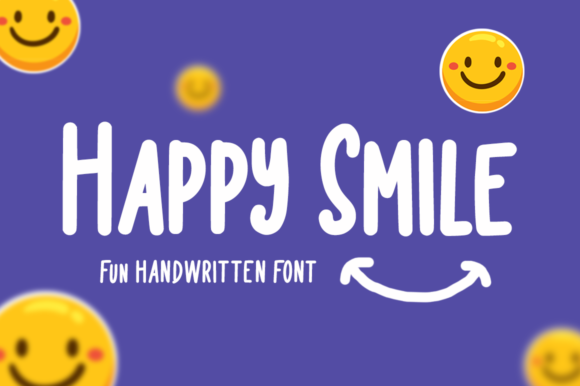
Happy Smile isn’t just “cute.” It’s a carefully balanced display font with soft curves, subtle contrast, and an authentic hand-drawn rhythm—without sacrificing legibility. The lowercase “a,” “g,” and “y” have gentle, open forms that avoid visual clutter. Uppercase letters carry presence but never overwhelm. There’s no aggressive sharpness or exaggerated swash that breaks during vinyl cutting or fades when printed on kraft paper. That balance is why it works so well for products where emotional resonance meets functional clarity—like boutique soap labels, baby shower banners, or seasonal market signage.
I use Happy Smile most often for short, high-impact text: product names (“Honey Lavender,” “Midnight Citrus”), event titles (“The Hartley Wedding,” “Maple & Mistletoe Market”), and decorative headers on printable wall art. It shines in SVG-style designs for layered vinyl projects—especially when paired with a clean sans serif (think Montserrat Light or Poppins Regular) for supporting details like dates, addresses, or care instructions. On candle jars, I set the scent name in Happy Smile at 14–16pt and keep ingredient lists in a neutral companion font. Customers consistently comment on how “thoughtful” and “inviting” the packaging feels—and that perception starts with typography.
For wedding stationery, Happy Smile delivers elegance without formality. It’s perfect for save-the-dates printed on textured cotton paper, foil-stamped welcome signs, or delicate vellum overlays on invitation suites. Unlike some script fonts that blur at small sizes or require manual kerning adjustments, Happy Smile holds its shape even at 10pt on RSVP cards—and reads clearly in photos shared on Instagram or emailed as digital invites. I’ve used it for monogrammed napkin tags, wooden cake toppers (cut from 1/8” birch), and printable vow books—all with consistent results.
It also performs beautifully on merchandise. When heat-pressed onto organic cotton tees or embroidered onto linen totes, Happy Smile retains its character without pixelation or jagged edges. For mug designs, I keep phrases under five words (“Good Morning, Sunshine,” “You’re My Person”) and avoid tight tracking—letting the font breathe. On holiday product packaging, it adds festive warmth to gingerbread cookie boxes or handmade ornament tags without leaning into cliché.
Readability matters most where precision counts. On my Silhouette Cameo, I convert Happy Smile to outlines before cutting intricate sticker shapes—this avoids any unexpected rendering shifts. For small round stickers (¾” diameter), I limit usage to single words or initials; anything longer risks crowding. And when designing digital printables—planner covers, habit trackers, or quote-based wall art—I always preview at 100% zoom and check grayscale mode to ensure contrast stays strong on home printers.
Font pairing is where Happy Smile truly becomes versatile. Its expressive nature pairs naturally with grounded, highly legible companions: a light-weight sans serif for body copy, a warm serif like Lora or Playfair Display for formal accents, or even a minimalist mono-spaced font for modern contrast (think “Hand-Poured • Small Batch • Made in Portland”). I avoid pairing it with other high-contrast scripts or overly decorative display fonts—that creates visual competition instead of harmony.
The version I purchased includes OTF and TTF files, basic OpenType features like standard ligatures and stylistic alternates (especially helpful for avoiding repeated letter collisions in words like “book” or “coffee”), and multilingual support covering Western European languages. No extended Cyrillic or Vietnamese glyphs—but more than enough for Etsy shops serving U.S., UK, Canadian, and Australian markets. If you're building brand identity across labels, social graphics, and packaging, those alternates let you subtly refresh visuals without switching fonts.
One practical note many crafters overlook: Happy Smile is licensed for commercial use—including physical products, digital downloads, SVG files, templates, and client work. That means you can sell candle labels featuring this font, bundle it into Canva-compatible printable kits, or embed it in editable PDF planners. Just double-check your license agreement for limits on total sales volume or redistribution rights—most reputable display font sellers (including this one) offer clear, scalable terms for small business owners.
At its core, Happy Smile bridges intention and execution. It helps your handmade goods feel intentional—not just well-made, but thoughtfully presented. Whether you're laser-cutting a nursery name sign, designing a bridal suite of matching stationery, or labeling a batch of small-batch hot sauce, this display font supports your story instead of distracting from it. In a marketplace crowded with generic typefaces, Happy Smile gives your products quiet confidence—and that’s something customers notice, remember, and return for.